
Childcare Costs in Australia
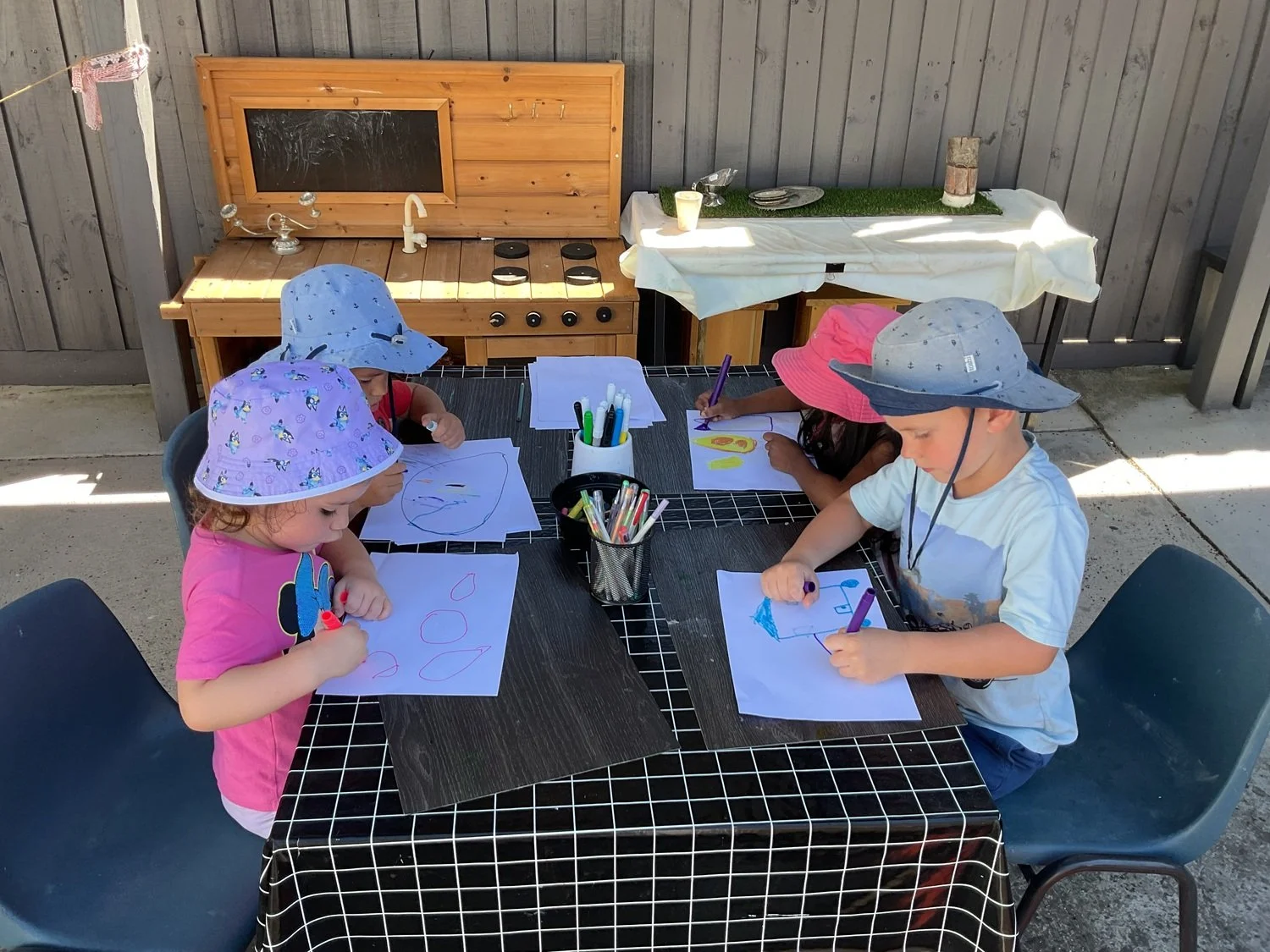
Kids working on their drawings in a long daycare centre, South East Melbourne, Australia
Childcare Costs in Australia: What Families Should Budget in 2026
When moving to Australia with young kids, childcare costs are a key consideration. With the rising cost of living since Covid, more and more mothers are finding themselves heading back to work sooner. Researching childcare providers and understanding the costs becomes a key part of family planning and budgeting.
Whilst childcare subsidies in Australia are complicated, they are not impossible to understand. In the December quarter of 2025, the national average hourly fee was $14.40 for Centre Based Day Care, $13.80 for Family Day Care, and $9.75 for Outside School Hours Care. Across all approved care, the average was $13.75 an hour.
How much does childcare cost in Australia?
Enough that it deserves its own line in the budget.
Official data shows Centre Based Day Care is still the most expensive mainstream care type on average, Family Day Care sits a little lower, and Outside School Hours Care is cheaper again. State differences exist, but they are not always dramatic. In the latest Department of Education data, average Centre Based Day Care fees were $14.60 an hour in New South Wales, $14.50 in Victoria, $14.05 in Queensland, and $16.10 in the ACT.
A family choosing between cities or moving for the first time should really compare rent, childcare and transport costs together using an Australian cost of living calculator, to build a proper buffer.
How Child Care Subsidy actually works in 2026
Lets’s get to business.
As of March 2026, the income cutoff has not disappeared. The current standard CCS rate is 90% for families with income up to $85,279, then it tapers down by 1 percentage point for every $5,000 of family income above that, reaching 0% at $535,279 or more. The important wrinkle is that you can still claim CCS even if your income estimate is $535,279 or more. If your actual income ends up lower, Services Australia can pay any entitlement when your CCS is balanced after the financial year.
Your CCS percentage applies to the lower of your provider’s actual hourly fee or the relevant hourly cap. For 2025–26, the hourly caps are $14.63 for Centre Based Day Care for children below school age, $12.81 for school-age children in Centre Based Day Care or OSHC, $13.56 for Family Day Care, and $39.80 per family for In Home Care. So if your service charges above the cap, the subsidy stops at the cap and you pay the rest.
From 5 January 2026, the old activity test was replaced by the 3 Day Guarantee. All CCS-eligible families now get at least 72 hours of subsidised care per fortnight, and families can get 100 hours per fortnight where they meet the higher recognised-participation threshold, have a valid exemption, or qualify under specific special circumstances. Services Australia also says Aboriginal and Torres Strait Islander children can get 100 hours per fortnight.
What does 100 hours actually mean?
This is the bit families really care about, especially if they need close to full-time care rather than the neat, theoretical version of childcare that lives in government examples.
Under the current rules, a family can get 100 subsidised hours per fortnight when the claimant and, if they have a partner, the partner as well - has more than 48 hours of recognised participation each fortnight. If a family is a couple, Services Australia uses the person with the lower recognised participation to work out the hours of subsidised care.
Recognised participation can include paid work, self-employment, paid or unpaid leave including parental or maternity leave, unpaid work in a family business, unpaid work experience or internships, approved study, training, and actively looking for work. One catch: if volunteering or looking for work is your only activity, Services Australia says it will only count the first 16 hours.
There are also other pathways to 100 hours, including some valid exemptions and special circumstances. Services Australia lists examples such as being temporarily outside Australia for up to 6 weeks, having a disability or medical condition that stops you from doing recognised participation, getting Carer Payment or qualifying for it except for the income or assets test, being in prison or psychiatric confinement in relation to an offence, having 65% or more care of a grandchild or great-grandchild, some child wellbeing situations, and case-by-case exceptional circumstances such as family and domestic violence or serious illness.
One practical point worth spelling out: 72 hours and 100 hours do not always translate neatly into “days” because providers bill differently. Services Australia’s own examples show that where a provider charges a daily fee for a 12-hour session, 72 hours can end up covering 6 days per fortnight, while 100 hours covers around 8 days per fortnight. That is why session length matters just as much as the sticker price.
A practical example: $150 a day, one child, family income $250,000
For a realistic example, assume a centre charges $150 for a 10-hour day, the child is below school age, the family earns $250,000, has one child in care, uses care 5 days a week, and qualifies for 100 subsidised hours per fortnight. Under the current income table, that family’s standard CCS rate works out to about 57.06%. Because the centre’s effective hourly fee is $15, CCS is calculated on the lower $14.63 hourly cap, not the full $15. That produces a subsidy of about $83.47 per day (57.06% * $146.3), leaving an out-of-pocket cost of about $66.53 a day, $332.64 a week, or about $1,441 a month before the standard withholding setting is applied. The withholding is 5% of CCS by default each fortnight to reduce the chance of an overpayment at year-end balancing. So the live cashflow number can be a little higher than the clean comparison number. On this example, the immediate cashflow cost is closer to $70.70 a day or $353.50 a week, unless the family has changed its withholding setting.
That is exactly why families should compare childcare by hourly fee, session length, CCS percentage and subsidised hours - not just the big daily number on the brochure. A daily fee can look reasonable right up until you realise it has quietly eaten half your weekly income and your optimism.
If you have more than one young child, the maths can improve
This is one of the rare parts of parenting admin that can make people feel slightly better.
If your family has more than one CCS-eligible child aged 5 or younger in care, and your combined income is under $367,563, one or more younger children may qualify for a higher CCS rate. Services Australia says the “standard rate child” is usually the eldest eligible child aged 5 or under, and the “higher rate child” is a younger eligible child. For higher-rate children, the rate is 95% up to $143,273, then tapers under separate thresholds before the higher rate stops applying at $367,563 or more. So for families with two children in care, the bill does not always scale in the brutally simple way people fear.
A simple rule of thumb
Out-of-pocket childcare cost = provider fee – CCS paid on the lower of the provider fee or hourly cap + any amount above the cap
That formula is not glamorous, but it works. It also explains why two centres with the same-looking daily fee can produce different real costs once you factor in hourly caps, session length and whether you get 72 or 100 subsidised hours. This is exactly the kind of thing parents miss when they compare centres too quickly, usually while replying to an email and being asked why clouds exists.
What families can do to keep childcare costs under control
First, compare the hourly fee, not just the daily fee. Second, check whether the service is charging above the CCS cap. Third, keep your family income estimate current with Services Australia, because that estimate affects your CCS percentage and how much may be withheld. Fourth, look closely at session length. Sometimes the “cheaper” centre is only cheaper until you realise you are paying for more booked hours than you actually need.
It is also worth comparing care types, not just centres. Nationally, the latest official averages still show Family Day Care below Centre Based Day Care on hourly cost, so this remains an option if you can find the right provider.
How much is childcare in Australia?
In the December quarter of 2025, the national average hourly fee was $14.40 for Centre Based Day Care, $13.80 for Family Day Care, and $9.75 for Outside School Hours Care. Your actual out-of-pocket cost depends on your provider, your child’s age, your CCS percentage, your subsidised-hours entitlement and whether the service charges above the hourly cap.
Is there still a CCS income cutoff?
Yes. The current standard CCS rate reaches 0% at family income of $535,279 or more. But Services Australia says families can still claim CCS even if their estimate is at or above that figure, because entitlement is balanced later against actual income.
Who gets 100 hours of subsidised care?
Families can get 100 hours per fortnight where they meet the recognised-participation rule of more than 48 hours per fortnight, have a valid exemption or other qualifying circumstance, or where the child is an Aboriginal and Torres Strait Islander child. Services Australia uses the lower partner’s recognised participation for couples.
Does CCS cover fees above the hourly cap?
No. CCS is worked out on the lower of the provider’s actual hourly fee or the relevant hourly cap. If the provider charges above the cap, you pay the difference.
Why is my real bill higher than my rough calculation?
A few usual suspects: the centre may bill long daily sessions, part of the fee may sit above the hourly cap, your family may only be getting 72 hours rather than 100 hours per fortnight, and Services Australia may be withholding 5% of CCS until balancing.